
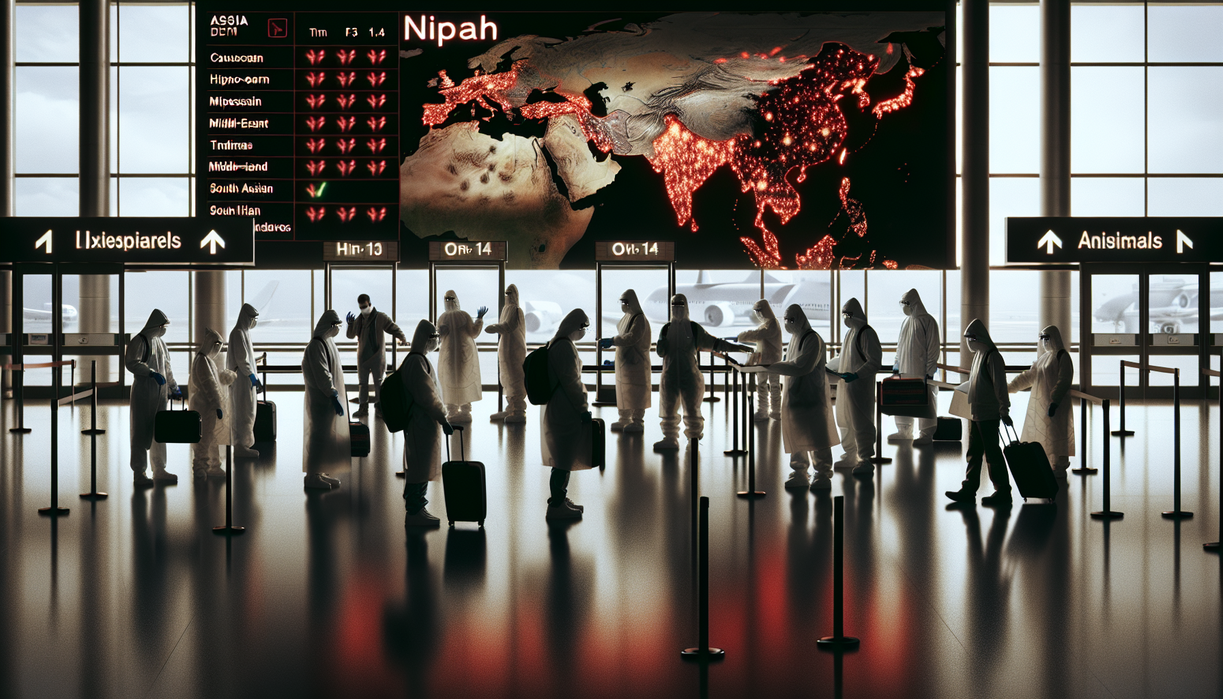
Health at the Gate: Lessons from Nipah Alerts
thebugskiller.com – Health security is once again under the spotlight as airports across parts of Asia tighten screenings after new Nipah virus cases emerged in India. This rare zoonotic infection has a reputation for high fatality rates, which naturally raises public anxiety about health risks linked to global travel. Yet behind the headlines lies a deeper story about how societies choose to protect collective health without shutting the world down. The latest response offers a chance to examine what we learned from recent pandemics and how we might safeguard health more intelligently this time.
Health checks at border points may feel intrusive or inconvenient, but they reflect a growing recognition that infectious threats travel as quickly as we do. Thermal scanners, health questionnaires, and isolation protocols are now common tools at busy hubs, especially when a virus like Nipah appears. For everyday travelers concerned about personal health, understanding why these measures matter can reduce fear and build trust. It is not only about stopping one virus; it is about designing health systems that can respond rapidly to any emerging threat while still respecting human movement and dignity.
How Nipah Virus Challenges Global Health Systems
Nipah virus is not new to the global health community, yet it continues to generate concern for sound reasons. The pathogen jumps from animals to humans, often through bats or infected livestock, then sometimes spreads between people. Health experts worry because past outbreaks have shown significant mortality rates, far higher than many familiar infections. Although Nipah outbreaks remain relatively limited geographically, every event reminds us that health security in one region connects to the rest of the world through travel, trade, and shared vulnerabilities.
For health authorities, Nipah highlights how fragile protective systems can be when contact between wildlife, farms, and cities intensifies. Urban expansion, deforestation, and intensive agriculture increase encounters between humans and host animals, silently reshaping the health landscape. Each new spillover incident becomes a test of surveillance networks, laboratory capacity, and communication strategies. When these elements align, health responses become faster and more precise. When they fail, minor flare-ups risk turning into wider health emergencies with far-reaching impact.
Airport screenings sit at a visible intersection of these global health dynamics. They represent the point where microscopic threats meet mass mobility. While no single checkpoint can guarantee perfect health protection, layered measures reduce risk. Temperature checks, symptom monitoring, and targeted isolation guide early detection. More importantly, they signal to travelers that health authorities are paying attention. In my view, this visible vigilance strengthens public confidence, provided the approach remains transparent, science-based, and sensitive to individual rights.
Airport Health Screenings: Promise, Limits, and Trade-offs
Health screenings at airports often receive criticism from both travelers and some experts. Skeptics argue that symptom-based checks miss people who are infected yet still feel well. That criticism is valid; no screening tool offers complete safety. However, the real value lies in combining many modest protections into a broader health shield. Questionnaires, thermal cameras, rapid tests, and on-site medical teams create multiple chances to catch a problem early. This layered strategy may not block every case, but it slows spread and buys time for wider health responses to activate.
From a personal perspective, I see airport health measures as a kind of social contract. Travelers accept small inconveniences—slower lines, added checks—in exchange for shared health benefits. The challenge is making sure that systems stay proportionate to actual risk. When health alerts stretch on for months, fatigue sets in, and people begin to ignore guidance. Clear communication about why specific steps are taken, how long they might last, and what evidence supports them keeps this contract intact. Honesty about both strengths and weaknesses prevents unrealistic expectations of total safety.
There is also a crucial equity dimension to these health strategies. Major international airports often have access to advanced screening tools, trained personnel, and well-equipped isolation areas. Smaller regional hubs or low-income countries might not enjoy the same resources, even though their health risks can be comparable or higher. A truly global health approach to threats like Nipah requires support for less-resourced locations, not only high-profile hubs. Otherwise we end up with islands of high security surrounded by large gaps, which undermines everyone’s health protections.
Building Smarter Health Systems Beyond the Crisis
Health policy debates often intensify during an outbreak, then fade when news cycles shift, but this is exactly when the most important work should begin. Emerging infections such as Nipah reveal cracks in health systems, from weak surveillance to slow lab confirmation or poor risk communication. Instead of treating each flare-up as an isolated event, we could use them as stress tests for long-term reforms. Strengthening primary care, training frontline workers, improving data sharing across borders, and investing in research on animal-to-human transmission all contribute to more resilient health systems. My view is that airport screenings should be the visible tip of a much deeper health strategy: one rooted in prevention, science, and solidarity rather than fear. If we treat every alert as a lesson instead of a temporary scare, we move closer to a future where protecting health does not rely on emergency responses alone, but on thoughtful, sustained preparation that respects both human mobility and human dignity.

Related Posts

Active Aging Playgrounds For A Better Lifestyle

Content Context: Needle-Free Futures in Medicine