
How Artificial Intelligence Helps Teens Fight Cancer
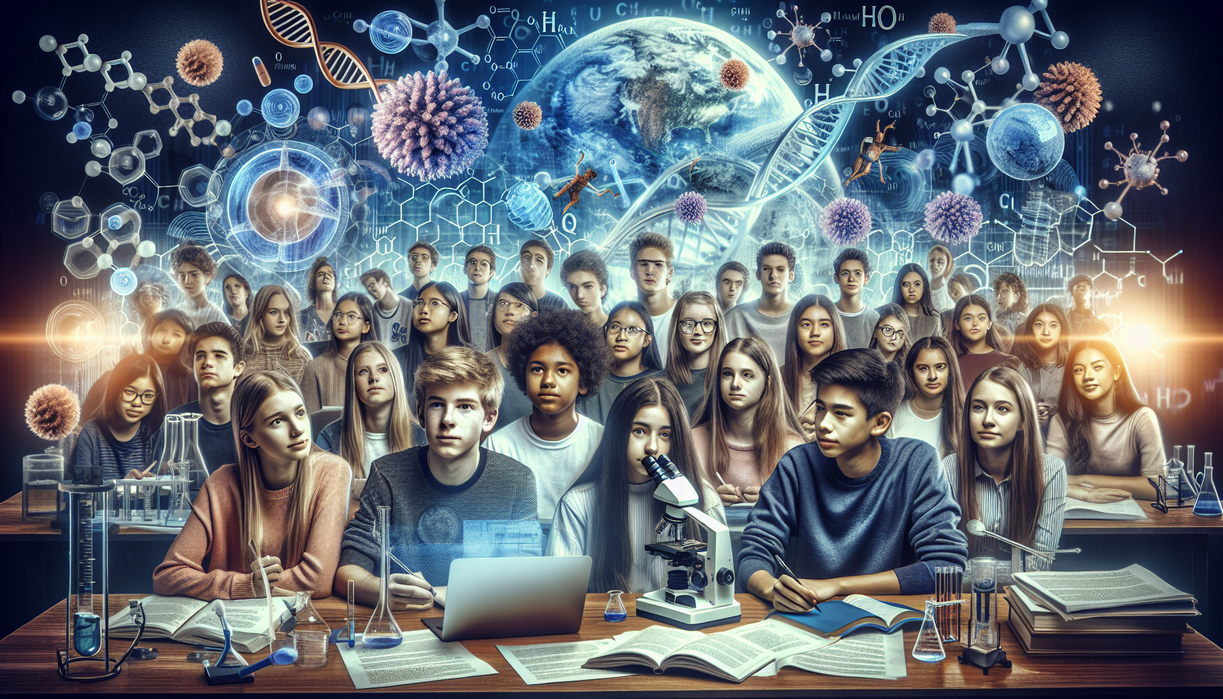
thebugskiller.com – Artificial intelligence is usually associated with tech giants and elite research labs, not high‑school students still juggling calculus homework. Yet a group of scholars from the Oklahoma School of Science and Mathematics (OSSM) has just helped push cancer research forward by co‑authoring a peer‑reviewed mini‑review on aquaporins, tiny water channels inside cells with huge therapeutic potential. Their project shows how artificial intelligence can open scientific doors earlier than ever before.
This milestone matters for more than bragging rights. It hints at a future where artificial intelligence acts as an intellectual amplifier, helping curious young minds explore complex biomedical questions once reserved for seasoned experts. By using AI tools to map research on aquaporins and cancer therapy, these students demonstrated that the next generation is not just learning science; it is actively reshaping it.
Artificial intelligence meets teenage curiosity
At the center of this story is the intersection between artificial intelligence and raw student curiosity. Aquaporins control how water and some small molecules move across cell membranes. When these channels misbehave, tumors can grow faster, spread more easily, or resist treatment. For teenagers to navigate such a technical topic, they needed help to process huge volumes of scientific literature. AI‑driven platforms offered exactly that kind of support.
Instead of reading hundreds of articles one by one, the OSSM team used artificial intelligence as a literature scout. Algorithms highlighted key studies, extracted major themes, and pointed toward unresolved questions about aquaporins in cancer therapy. Students still had to think critically, verify claims, and decide what mattered. AI did not hand them answers; it simply removed some of the heavy lifting that often discourages young researchers from entering advanced fields.
From my perspective, this collaboration between human insight and artificial intelligence represents the healthiest way to use modern tools. The students treated AI less like an oracle and more like a research assistant. Their success suggests that when education systems embrace AI thoughtfully, high‑school classrooms can become launchpads for authentic scientific contributions instead of just rehearsal spaces for standardized tests.
Why aquaporins matter for future cancer therapy
Aquaporins might sound obscure, yet they influence several cancer hallmarks. These proteins create channels that allow water, glycerol, and other small molecules to pass through cell membranes. Tumors often hijack this machinery to support rapid growth, invasion, and survival under stress. By reviewing the literature with artificial intelligence support, the OSSM authors highlighted how altered aquaporin expression can correlate with tumor aggressiveness and treatment outcomes.
Emerging research suggests aquaporins could become both diagnostic markers and therapeutic targets. For instance, drugs that block specific aquaporins might shrink tumors by disrupting nutrient flow or reducing their ability to invade nearby tissue. Conversely, boosting certain aquaporins in healthy tissue could improve drug delivery or reduce side effects. The mini‑review guided by artificial intelligence synthesized these hypotheses, organizing scattered findings into a roadmap for future experiments.
There is also a philosophical angle here. Cancer research often feels dominated by familiar stars such as oncogenes or immune checkpoints. Aquaporins remind us that biology contains countless supporting actors that quietly shape disease. By focusing on these less celebrated players, the students revealed how artificial intelligence can help spotlight emerging topics that risk being overlooked by mainstream narratives and traditional funding priorities.
AI as a catalyst for student‑led discovery
What excites me most is how this project reframes artificial intelligence as a catalyst for student‑led discovery rather than a shortcut. The OSSM example shows that with guidance, teenagers can use AI tools to navigate peer‑reviewed databases, identify conceptual gaps, and craft coherent narratives that meet scientific standards. This is more than a novelty; it is a template for future STEM education. If schools train students to pair skepticism with AI‑enhanced analysis, we might see more youth‑driven reviews on niche topics, more cross‑disciplinary ideas, and a broader talent pipeline entering cancer research. In that future, artificial intelligence will not replace scientists; it will help new ones arrive earlier, better prepared, and more imaginative.

Related Posts
Content Context: Needle-Free Futures in Medicine

Putting Cholesterol in Context: The Lp(a) Test